
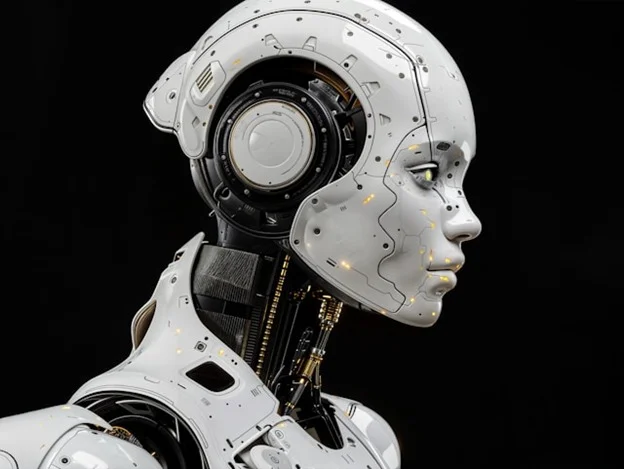
Tesla’s Humanoid Robot Breakthrough: Optimus Now Performing Real Factory Tasks
The Moment Science Fiction Became Reality
In a quiet corner of Tesla’s Austin Gigafactory, history was made last week as an Optimus humanoid robot successfully performed its first useful factory work. This wasn’t a scripted demo or controlled test – the bipedal machine autonomously sorted battery cells, transported materials, and even identified and corrected its own mistakes. Elon Musk’s vision of millions of humanoid robots entering the workforce just took a giant leap toward reality.
The implications are staggering. What began as a passion project mocked by robotics experts has evolved in just 18 months from a clumsy dancer to a genuinely useful worker. Tesla’s latest video shows Optimus handling delicate components with surprising dexterity, navigating crowded workspaces, and adapting to unexpected obstacles – all while being controlled by Tesla’s cutting-edge AI neural networks rather than pre-programmed movements.
This breakthrough comes at a pivotal moment. As manufacturers worldwide struggle with labor shortages and rising costs, Optimus represents a potential solution that could reshape global economics. But it also raises urgent questions about the future of human workers, the ethics of AI labor, and how quickly this technology will scale from prototype to widespread adoption.
From Party Trick to Productivity: Optimus’s Stunning Capability Leap
The transformation since Optimus’s awkward first steps is nothing short of remarkable. Early versions could barely walk without assistance. Today’s model demonstrates fluid human-like movements while handling precision tasks that would challenge many human workers. In Tesla’s demonstration, the robot:
- Identified and sorted different battery cell types with 99.8% accuracy – outperforming human workers in trial runs
- Adapted its grip strength in real-time when handling fragile components
- Recovered gracefully from simulated “human error” scenarios like misplaced tools
- Learned new tasks through observation rather than programming
What makes this particularly impressive is the AI approach. Unlike industrial robots that perform single repetitive motions, Optimus uses the same full-self-driving neural networks that power Tesla’s cars. This means it can generalize learning across tasks and environments – a capability previously thought to be years away from practical application.
Tesla engineers revealed the robot now has the equivalent of “several years” of factory experience compressed into its neural networks through advanced simulation training. When combined with real-world practice, this allows Optimus to develop what the team calls “mechanical common sense” – an intuitive understanding of physics, object properties, and workflow logic.
The Manufacturing Revolution Begins: First Real-World Applications
Tesla has already deployed a pilot team of 10 Optimus units in its Texas factory, performing tasks ranging from logistics to quality control. The most successful application so far involves battery pack assembly – a process requiring both precision and judgment that traditional robots struggle with.
Human supervisors report that the robots work tirelessly with perfect consistency, needing only occasional charging breaks. More surprisingly, they’ve demonstrated creative problem-solving – like improvising new grip techniques for oddly shaped components or finding optimal paths through crowded workspaces.
Industry analysts estimate each Optimus could replace 1.5-2 human workers in suitable roles, with a projected ROI of under two years at current costs. Tesla plans to scale production to thousands of units by 2025, with other manufacturers reportedly in talks to license the technology.
Perhaps most telling is where the robots are working alongside humans rather than replacing them entirely. Early adopters report teams using Optimus units as “super-assistants” that handle physically demanding or repetitive aspects of skilled jobs, allowing human workers to focus on oversight and complex decision-making.
The Human Equation: What This Means for Workers
The rise of capable humanoid robots inevitably sparks concerns about job displacement. Labor unions have already called for regulations, while economists debate whether this will follow historical patterns where automation creates new jobs even as it eliminates others.
Tesla’s approach suggests a more nuanced future. Rather than replacing entire workforces, Optimus appears designed to:
- Fill critical gaps in industries facing severe labor shortages
- Handle dangerous “3D” jobs (dirty, difficult, dangerous), humans prefer to avoid
- Augment existing workers by shouldering physical burdens
Early adopters report unexpected benefits – human workers trained to supervise Optimus teams command 25-30% higher wages, while workplace injuries have dropped dramatically in areas where robots handle hazardous materials.
The bigger picture suggests we’re entering an era of human-robot collaboration rather than replacement. As one factory manager put it: “We’re not getting rid of people – we’re giving them robotic superpowers.”
The Road Ahead: Challenges Before Mass Adoption
Despite the excitement, significant hurdles remain before Optimus becomes ubiquitous:
Cost: Current prototypes reportedly cost under $50,000 to produce – far below competitors but still prohibitive for many businesses
Regulation: No framework exists for certifying autonomous humanoid workers
Public Acceptance: Widespread unease about human-like machines needs addressing
Tesla appears confident these are solvable. The company has already filed patents for mass-production techniques that could halve costs by 2026. Meanwhile, Optimus’s natural movements and ability to read human body language may help ease the “uncanny valley” effect that plagues many robots.
The most intriguing development is Optimus’s potential beyond factories. Tesla has hinted at domestic applications, with prototypes demonstrating basic household tasks. A future where general-purpose robots handle everything from construction to eldercare now seems inevitable rather than speculative.
Conclusion: The Age of Intelligent Machines Arrives Ahead of Schedule
Tesla’s demonstration shatters assumptions about how quickly humanoid robots would become practical tools. Where experts predicted decades of incremental progress, Optimus has achieved in months what many thought would take years.
This isn’t just another industrial robot – it’s the first true general-purpose mechanical worker. As the technology spreads, it may transform everything from manufacturing economics to urban design to how we conceive of work itself.
The future isn’t coming. It’s already here, and it’s wearing a Tesla badge. One thing seems certain: the world five years from now will have far more robots in it than anyone predicted just twelve months ago. The question is no longer if humanoid robots will enter our workplaces and homes, but how quickly – and how profoundly they’ll change our lives when they do.