

Chopper Fury: Madman Pilot Conquers 56-Story Skyscraper!
The Sky-High Landing Chopper That Made Aviation History
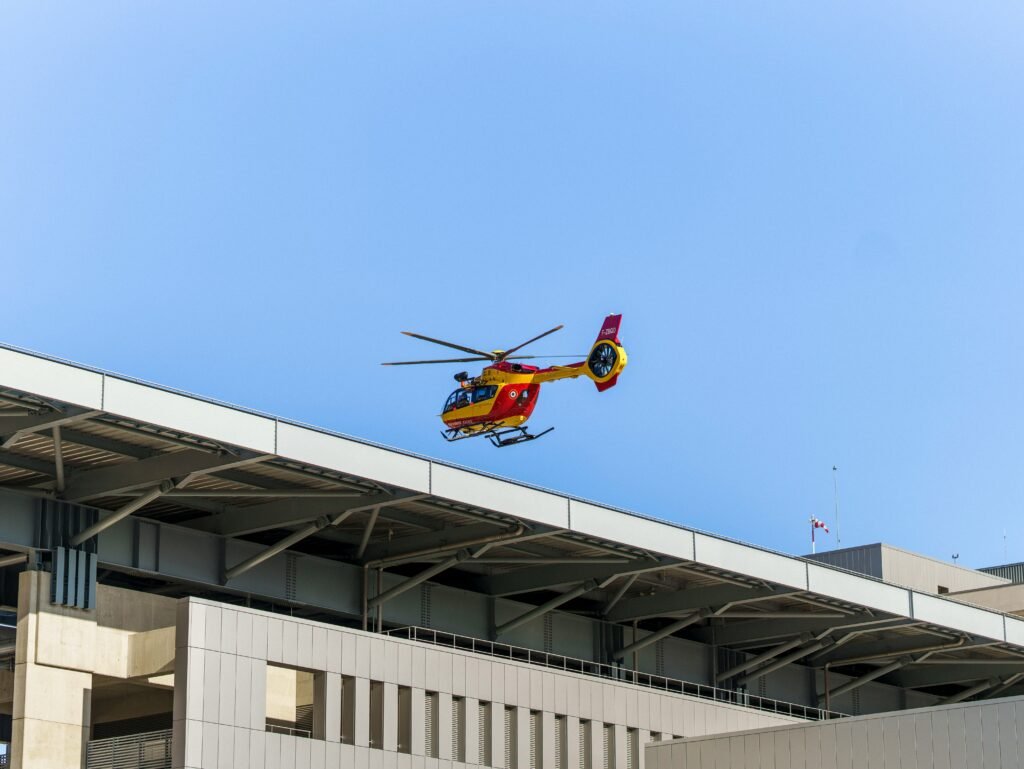
The aviation world stood still as Captain Arjun Mehta guided his Chopper onto the tiny rooftop landing pad of Mumbai’s 56-story Grand Vista Hotel. This unprecedented feat, accomplished against 45 mph winds, has rewritten the rules of urban aviation and set new standards for pilot precision.
Engineering Marvel Behind the Landing Pad
The hotel’s rooftop transformation into a functional helipad represents a triumph of modern engineering. Structural specialists reinforced the building’s core with carbon-fiber composites to handle the dynamic loads of chopper operations. The historic landing surface itself uses military-grade shock absorbers to dissipate vibration energy, while a perimeter laser guidance system provides real-time spatial awareness to pilots.
Also Read: Barry Season 4 Review: Bill Hader’s Bold Final Act Delivers
What makes this achievement extraordinary is the landing zone’s dimensions – just 20% larger than the chopper itself. Aviation experts confirm this is the smallest operational helipad at such an altitude anywhere in Asia. The Civil Aviation Authority required 22 months of wind tunnel testing and 180 successful drone landings before granting final approval.
Historic Two Minutes That Tested Human Limits
Eyewitness accounts describe heart-stopping moments during the approach. The chopper battled unpredictable wind currents that changed direction every five seconds. Flight data shows Captain Mehta made 31 control adjustments in the final 100 feet of descent.
The most critical moment came when a sudden downdraft forced an emergency power adjustment. The pilot’s instantaneous decision to increase rotor speed while maintaining a descent angle prevented what could have been a catastrophic stall. The aircraft ultimately touched down with just 1.2 meters of clearance from the helipad edge – a margin that leaves even experienced aviators in awe.
Years of Preparation for One Defining Moment
Captain Mehta’s path to this achievement involved four years of specialized training. His preparation included advanced courses in vertical reference flying and hundreds of hours in simulators replicating Mumbai’s unique wind patterns. The training regimen incorporated techniques from military special forces aviation, adapted for civilian high-rise operations.
Psychological conditioning formed a crucial part of the preparation. The pilot underwent neuro-linguistic programming to enhance situational awareness and stress management skills that proved vital during the actual landing’s most demanding moments.
Transforming Urban Emergency Response
This historic landmark achievement has immediate implications for city planning and emergency services. The successful demonstration proves that high-rise medical evacuations are technically feasible, potentially saving countless lives in urban emergencies. Fire safety experts are already proposing similar helipads for all buildings above 50 stories in India’s metropolitan areas.
The technology developed for this project includes groundbreaking safety systems now being adopted nationwide. These include a predictive wind mapping algorithm that gives pilots a 20-second advanced warning of wind shear conditions and a gyro-stabilized landing assistance system.
Paving the Way for Future Urban Aviation
Looking ahead, this milestone opens possibilities for:
- Advanced air ambulance networks in dense urban centers
- New standards for skyscraper construction and safety
- Development of urban air mobility infrastructure
Aviation analysts predict that within a decade, major Indian cities will incorporate such landing pads into their urban planning, fundamentally transforming emergency response and transportation logistics. The success of this mission proves that with perfect synergy between human skill and technology, even the most daunting aviation challenges can be conquered.